


I was stuck.
I was sitting at my desk, staring at the screen of my laptop, waiting for a moment of insight to hit me. Waiting to uncover what would help me get our marketing out of a plateau we’d been in for a few months.
A minute passed.
5 more minutes passed.
Another 20 minutes passed.
And there I sat, no closer to getting unstuck + no flashes of brilliance anywhere in sight.
So I grabbed the pup, put his leash on, and we went for a walk.
Left the headphones at home, no podcast or music playing, just a good old fashioned walk to let my mind “air out” a bit.
A half hour later, we’re back home + I had 8 different notes saved in my phone containing ideas + insights to dig into to help break out of the plateau.
And that’s what leads to today’s newsletter. A quick reminder that going for a walk remains undefeated whenever we get stuck, and a list of ideas + plays you can steal the next time you find your funnel’s hit a plateau at a certain stage.
Here are the plays I've run/tested over the years to break through each stage of our funnel.
Sponsor: You/Your Company?
If you’re looking to get in front of an engaged audience of some of the savviest marketers + GTM practitioners, this is your opportunity. One sponsorship per month to sponsor this newsletter has become available + I’m sure will claimed quick, so if the audience reading this newsletter is your ICP, this is your chance.
A few months ago I was talking to a VP of Marketing + they said they were exploring/in negotiations with one of the sponsors of this newsletter after learning about them here + seeing them as a product that I endorse. That’s the power of these types of partnerships done well (vs. the AI influencer dumpster fire some are experimenting with).
Simply reply back to this email if you/your company is interested or drop me a DM on LinkedIn.
Constraint #1: website visits > handraiser rate
You’re getting people to your website, but want to increase the rate at which they take action.
Play 1.1: Add more conversion points across the website

Don’t let the simplicity/obviousness of this one fool you. I’ve overindexed before on the sticky nav to do the heavy lifting of converting web visitors, assuming they’d know to go there when they were ready to take action.
Make the experience as easy as possible for your visitors. CTAs in the nav, hero, sprinkled throughout the scroll experience of the page content, + the footer are near-requirements. Then feel free to experiment with things like in-app chat popups, exit-intent banners, etc. if you really want to go nuts.
Play 1.2: Social proof

“Is this product/service built specifically for people like me, struggling with the type of problem we’re currently experiencing?”
This is the question every web visitor is asking themselves when they hit the website. And it’s SO important that this is answered as quickly as possible.
The problem is most visitors are skeptical of marketing claims like “#1 [category] software” since everyone says that. The best way to counter this is to get specific AND do so using data from the customers you have that are exactly like those visiting the site.
Logos are great for recognition + telling a visitor that companies like them use your product. But the real power comes when you can grab quotes + real results from them that answer the second question the prospect has - that they solved the problem and are now thriving.
Play 1.3: CRO experiments
The best way to break through this constraint is to simply get experiments in play + adopt a mentality of continuous iteration on them.
Every persona + market operates differently, so blanket best practices for how pages should be laid out, the type of content that should be surfaced, etc. is a watered-down average. The best websites operate using what they’ve learned from their market + buyers specifically.
Whether it’s as simple as button colors or as specific as the medium + style in which content is being presented, there’s always room for growth when it comes to this play.
Play 1.4: Interactive demo
Letting visitors experience your product before committing to a meeting removes the biggest objection they have (”I don’t know if this is worth my time”).
Visitors who complete a product tour on the website convert to handraisers at a significantly higher rate than non-product tour viewers. Bonus is that they also typically convert from handraiser to SQO at a higher rate as they go into the call with your sales team already understanding what it is that the product does.
Play 1.5: Objection handling content

“There’s no way our finance team will approve this purchase.”
”I don’t have access to the data this tool needs in order to work.”
The list of objections goes on and on. Most companies rely on the prospect getting into the conversation with sales so they can answer these questions.
The problem with that is there’s a good chunk of people who never fill out the form because they believe they already know the answer to it + that the call won’t be worth it. That’s why proactively presenting this type of content is a wildly underused tactic on the website + one I’m increasingly bullish on moving forward.
Constraint #2: not enough handraisers
Play 2.1: Use case videos

Similar to the interactive demo on the website, proactively getting use case videos out to the market is the epitome of “show, don’t tell.”
When your prospects see how easy it is to solve their problem vs. being told (and as a result, skeptical of) by a sales rep that the product/service will solve their problem is a night + day difference.
Play 2.2: Paid ads
This one’s pretty self-explanatory 🤷♂️
If you aren’t running anything, pushing ads out to your ICP will give you a boost. If you are running ads, making sure you’re hitting the right people (strong targeting) + are using compelling content (videos, thought leader ads, etc.) are the two buckets with the most opportunity to optimize.
Play 2.3: Give value to get value
“Register for a demo + we’ll send you a $100 Amazon gift card!”
Great way to get demo requests, terrible way to get SQOs. Most come for the gift card + very few go on to be SQOs.
The idea here is strong in that it pulls people into your funnel who may not quite be compelled enough to take action, but the execution/”carrot” being used is wrong.
Best thing to do is give the prospect value that only you uniquely can give them AND that it’s a function of the product/service you’re marketing.
Here’s an example of one I’m running right now:
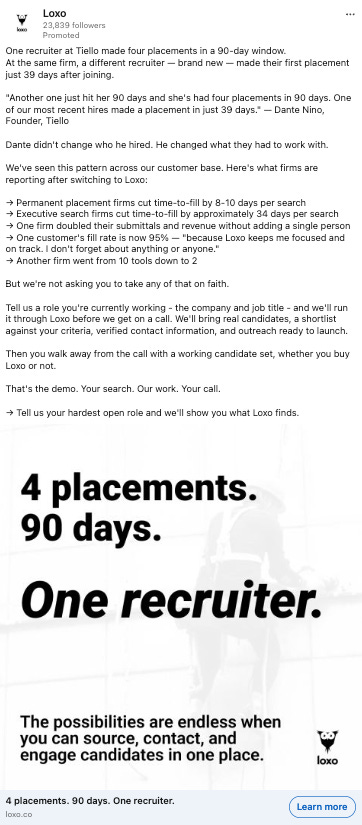
ICP is clearly called out in the creative
Desired/impressive result is clearly called out in the creative
The answer to how this is possible is called out in the creative
The post copy contains more examples of desired outcomes
The post copy CTA is value-led to the prospect that’s a no brainer - they get help on a role they’re struggling with and can see how the software works in practice (not theory)
Play 2.4: Update stale content on site
Google + LLMs are putting increased weight on the recency of content to determine what they serve up to searchers.
Most websites have countless pieces of content floating around. Go back + refresh/update the heavy hitters. Toss in new data, provide new context, etc. and make sure the page has something like “published on” or “last updated on” so that it can be indexed and considered appropriately.
Play 2.5: Referral program
People love to tell others about things they love. You probably already have a fair bit of growth due to word of mouth whether you know it or not, but the key here is putting a proper incentive behind it.
The best referral programs operate under a “you win AND they win” incentive. Think: they get a month free + you get a month free.
Constraint #3: handraiser > SQO rate
Play 3.1: remove demo scheduling friction
Another obvious one that most of you here have probably implemented over the past few years, but sharing because this should be a non-negotiable now.
Allow prospects to schedule the date + time of their demo as soon as they fill out the form. Reducing friction between the request + getting them to the discovery call converts more demos into qualified opportunities.
Play 3.2: ICP/targeting refinement
It’s nice to have a broader pool to target with ads, emails, calls, etc. But have you ever noticed how certain segments/personas seem to do better/worse at turning into SQOs? I bet you have.
Take that data + layer it into your prospecting efforts. If we know you can get a bunch of demos from a certain industry, but they rarely convert into SQOs, then we’re just on the lead gen hamster wheel + pretending we’re hitting our goals since demos are technically coming through. Tighten up industries, job titles, etc. and watch this rate increase.
Play 3.3: channel audit
Similar to the above, there are channels where we know we can get a higher volume of leads from them, but they usually convert at much lower levels than others (looking at you Facebook…).
If you aren’t to the point of diminishing returns on a channel that does convert well to SQO, this is where I typically pull back budget from the “higher” demo volume, but lower SQO volume (function of that conversion rate) + allocate that over to the channel that does convert better.
Play 3.4: lead qualification process

BANT. MEDDIC. CHAMP. SPIN. NEAT.
The list of sales qualification methodologies goes on and on. The main thing is to simply pick one that works for your organization + standardize it across the team.
A tighter qualification framework reduces inconsistency in how reps assess the fit of leads coming through + that typically results in improving this conversion rate as you iterate over time on what you find does/doesn’t convert well.
Constraint #4: SQO > win rate
Play 4.1: gifting/direct mail
This one needs to be used with common sense, but let the psychological principle of reciprocity work in your favor.
The best plays to use in this 4th constraint bucket all revolve around 1:1, relationship-based dynamics. Take the time to research the people you’re engaging with in the deal + send them something that pairs in with that finding.
The value isn’t as important as the signal this gives the prospect of you taking the time to show you value them at a 1:1 level + that this is a representation of what working with your company over the long-term will be like.
Play 4.2: executive sponsor
I don’t have hard data on this, but I can tell you that any time I’ve had the CEO or other leader of a company jump into the conversation when I’m evaluating software/services, I buy from that vendor far more than I don’t.
There’s a certain weight that the attention of executives carries with the market + the more you can leverage that inside deals, the better the outcomes typically are.
Play 4.3: get face time

Whether it’s a simple drop-in to a prospect’s office to bring them cookies from a local bakery or a more formal onsite presentation for the team you’re selling to, face time goes a longggg way in closing deals.
Better yet, get prospects outside of the office. Take them to dinner. Have them meet you for an “experience” type event. TBH anything that gets them outside of the “buttoned up” persona they feel they need to carry in the office + into an environment where they can be more like themselves.
Bonus tip: don’t limit this to executives/”buyer” personas only. Get the internal champions + power users involved here. These individuals are more impactful to your deal closing than any other factor once you hit SQO stage.
Putting this into action
If you know where in the funnel you’re constrained, get some experiments in play. Steal some from the above, or spin up an account in Affect where there are 50+ different, proven plays you can run to break through the plateau. Perk of that platform is that not only do you get access to all of the plays, but when you commit to a play, it logs the current conversion rate/volume so you can see its impact after the experiment period.
AKA no more wondering “what’s working” - you can see it with your own data.
Founding member rate is still available - 45 left at $99/mo, locked in for life. Or, as one of the first users said:
"It's $99 and cancelable after 30 days, it's pretty risk-free. I pay more for an Uber to the airport."
See you next Saturday,
Sam
P.S. next weekend is the 4th of July here in the US, so no newsletter as I’ll be spending time with the fam. See you on the 11th :)