


"Yes, the lead that came through is from a target account, but their title is too junior so I’m going to disqualify them"

THAT'S 👏 BECAUSE 👏 LEADERSHIP 👏 HAS 👏 THEIR 👏 TEAM 👏 DO 👏 THE 👏 RESEARCH
Unless you're targeting small companies, an effective leader often delegates buying research to the members of their team who would benefit from the purchase.
If you ever want to see me get HEATED about a subject, this is one of them. Let’s talk about why…
Sponsor: You/Your Company?
If you’re looking to get in front of an engaged audience of some of the savviest marketers + GTM practitioners, this is your opportunity. One opening per month to sponsor this newsletter has become available + I’m sure will claimed quick, so if the audience reading this newsletter is your ICP, this is your chance.
A few weeks ago I was talking to a VP of Marketing + they said they were exploring/in negotiations with one of the sponsors of this newsletter after learning about them here + seeing them as a product that I endorse. That’s the power of these types of partnerships done well (vs. the AI influencer dumpster fire some are experimenting with).
Simply reply back to this email if you/your company is interested or drop me a DM on LinkedIn.
📚 Story time 📚
A client I worked with years ago while at Refine Labs with had an inbound demo request come in from a perfect fit ICP prospect. Like tier 1, check allllll the boxes, “would love to have their logo on our website” perfect fit.
...but the job title associated with the submission was "Intern."
Since we tracked all of their inbounds, when I saw that demo request come through, I was STOKED + sent them a message of congratulations and to hear how they were going to make sure they got the red carpet treatment.
Turns out, they were about to disqualify it. It wasn’t the right “persona” since it was an intern.
A few deep breaths and goosfrabas later, I challenged them to give that intern a call. I told them about how I had been in positions like that before where I was doing research for our company’s decision-makers.
Fast forward a couple of hours later + I got a note message back from them:
"So, we had the discovery call with the intern and he's working directly for the CEO. Was tasked with researching which solution they should purchase to solve what they're going through."
The next call with the account was the demo, and guess who was on it - the CEO.

What the data tells us
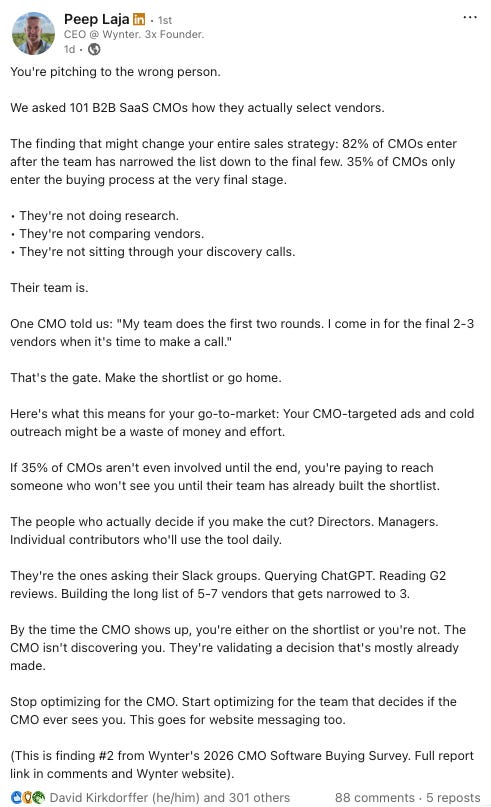
Peep Laja hit on this earlier this week with this post on LinkedIn:
Two BIG stats to recognize here:
82% of CMOs enter after the team has already narrowed down the list
35% only at the very final stage
AKA, if you’re optimizing for the executive only with your targeting, you’re fighting with your hands tied behind your back.
The execs aren’t doing the research or taking the discovery calls - they’re having their team do that. Or to pull from the post above, "My team does the first two rounds. I come in for the final 2-3 vendors when it's time to make a call."
What we need to learn/remember here
Unless you're targeting small companies (1-10 employees), an effective leader often delegates software/services research to the members of their team who would benefit from the purchase. They’re the individuals who are feeling the pains, not hitting targets, or are tasked with solving for how they’ll hit increased targets. And since they’re the closest to the problem, the savvy executive lets them do the initial research + vetting.
While the individual who signs your contracts may be the CEO/CFO/CMO/VP/etc., more often than not, they're only involved later in the process after their team has done their due diligence.
So all of those ads targeting execs, BDR calls to leadership teams, etc., are far from the best use of your resources.
The people deciding if you make the initial shortlist are 2-3 levels down from them. They’re the directors, managers, individual contributors, etc. who would benefit from the purchase.
By the time the exec shows up, you’re either on the shortlist or you aren’t. The team has decided if you’ll be involved when the decisionmaker gets pulled in.
So what this means for us as marketers + GTM practitioners is this:
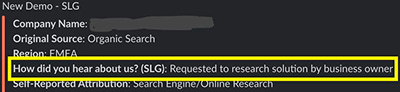
🙅♂️ Do NOT automatically DQ an inbound handraiser who fits your ICP but their title is "too junior"
🧐 Know ALL of the job titles of your product’s end-users within your ICP + target them
The ultimate decisionmaker is often too far removed from the pain - the employees who would benefit from your solution are the ones who will advocate up the chain for you.
That said, you still need to have some inkling of mental mindshare with the decisionmaker so that when the final 3 options bubble up to them, they recognize your name over the others, that you've somehow demonstrated credibility earlier on with them.
That's what takes you from 1 of the final 3 to "tell me why we shouldn’t go with [brand]."
Book quote of the week
“And it became the place where [Jobs] really learned, albeit slowly and reluctantly and against his natural instincts, that sometimes the best management technique is to forgo micromanagement and give good, talented people the room they need to succeed.
- Becoming Steve Jobs, by Brent Schlender
See you next Saturday,
Sam
It's really surprising to me how often this occurs.
I was talking about this last week with a client on their qualification process. They sell leadership and culture development systems. They had thousands of companies in their HubSpot install and 90,000 newsletter subscribers.
They thought newsletter subscribers were soon to be customers and an Operations Manager seeking information was not qualified.
So I sifted through their HubSpot and found 71 "not qualified - wrong buyer"
I picked those out, looked at the companies, estimated the value of the lost business and sat down with them.
Why did you disqualify this company.
Person not senior enough.
Correct. They are not the buyer. They are the scout. They scout out the leadership program THAT THEY WILL CONSUME.
A customer is someone who buys something.
A consumer is someone who consumes something.
They disqualified an estimated $3.2MM in deals without ever really engaging.
The company did $3MM last year.
Know your customers. Know your consumers.