


Things commonly seen/heard in the B2B space
AEs sending their 7th email in a 2 week span:
“Hi Sam - Me again 🙃 Apologies for the professional persistence. Here’s a link to my calendar to grab time for us to talk.”
Marketers on email working “well” for them + want to juice it for more:
”Let’s send emails out to our market daily instead of weekly!”
BDRs on cold-calling:
“I double tap (call back to back if no answer) prospects regularly”
Meanwhile, how prospects/customers feel on the receiving side of these tactics:

Sponsor: HockeyStack
Imagine you have a deal sitting in your forecast that’s expected to close, only for it to stall because no next step was scheduled. Or because the decision-maker stopped engaging.
These signals are often unnoticed until it’s too late. The team doesn’t think anything of it when the decision-maker hasn’t replied for a week or two - “they’re probably just busy.” Having an agent that identifies this risk + also proposes a recovery plan (i.e. finding a new champion there + proposing how to engage them) is the natural evolution of how agents should support our efforts.
HockeyStack’s new AI Revenue Agent brings use cases like this to the forefront so GTM practitioners can keep + win the pipeline they worked so hard to generate. This is the future of AI agents in GTM.
Here’s the deal
For too long, B2B companies have operated under the impression that touches are either impactful or not impactful, or more simply put, they’re either “positive” or “neutral.” Since these touches are viewed from a “new customer acquisition” lens, it’s viewed as a binary yes or no response to “Did [touchpoint] lead to better business results?” and not “Did [touchpoint] result in the prospect thinking more positively or negatively of us?”
But a CRM will never show negative pipeline created, and that’s precisely why this has been so often overlooked.
Until now.
Put yourself in their shoes
Take a step back from your marketing/sales/etc. role and be your prospect for a minute.
You’ve just received 2 calls back to back from a number you don’t recognize after intentionally screening the first call
A few minutes later, you receive an email that starts with “Me again 🙂 I apologize for my professional persistence, but you could really benefit from [our product/service]. Here’s a link to my calendar to grab time for a demo.”
A handful of hours later, you receive a generic email from their marketing drip sequence inviting you to a webinar…but the persona/segment is the wrong one
All of this in just one day.
And while the above is a fictitious scenario, I can attest firsthand to having the above experience happen to me multiple times over the years (or just last week as you can see from the screenshot below…) as various companies tried to get me to buy from them.
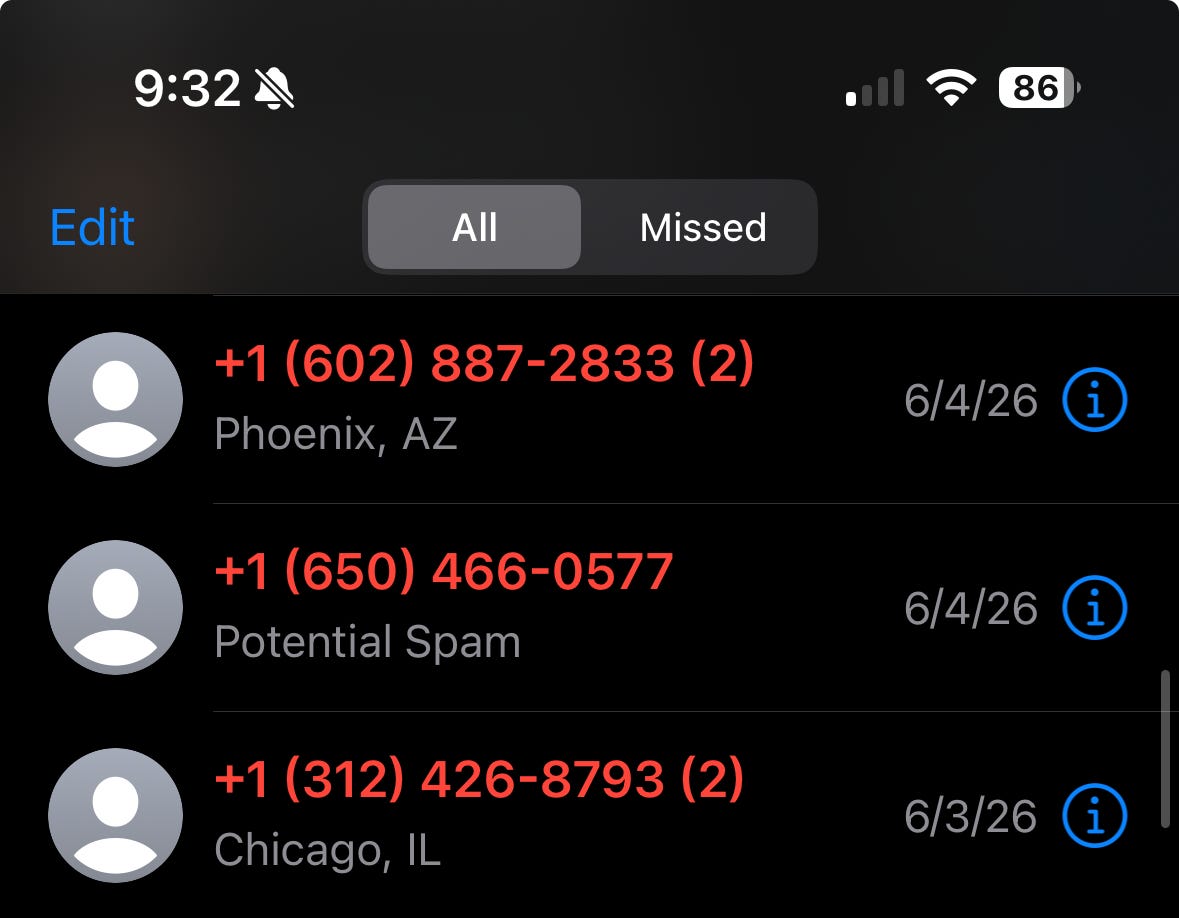
What would you do if you were in your prospects’ shoes? Remember:
You aren’t looking to buy anything right now (+ you certainly don’t want to deal with the internal change management as everyone’s working hard enough to keep up with the new AI mandate in their company…)
You’ve never been to this company’s website, so you aren’t even sure what they really do
You didn’t ask for them to reach out to you
You’re already strapped for time trying to do the things you need to complete in your day-to-day
You flat out don’t trust them or know how credible they are
So how would you respond in this scenario? Would you ignore them? Would you cave and take the call? Would you get furious after receiving the 9th call + email from them?
This last group is one that isn’t accounted for.
Most companies today play the volume game…
Execs after learning about the predictable revenue model:
“If our SDRs make 100 calls/emails per day, we know we’ll get 10 meetings booked and 1 opportunity, so let’s get them on the phone cranking even more out!”

The problem with this math is that while you may get 10 meetings booked and 1 opportunity, you’re not taking into account what happens with the other 90 calls/emails that have been hitting your market over the head 10+ times in the past week.
Of those 90 prospects, here’s what’s likely going to happen:
55 are simply going to ignore you
20 will finally reply and say they’re not interested
10 hit the unsubscribe
5 are completely turned off + you’ve burned the bridge for them to ever become a customer (not to mention the negative word of mouth they’ll spread when peers ask for their opinion…)
Let that sink in for a moment.
Of the 100 emails/calls you’re making, you’re making a trade-off.
10 meetings booked for 5 burned bridges.
1 opportunity today for 5 opportunities that will never come about in the future.
This is the epitome of having a short-term focus only + not thinking about how to grow your company in a sustainable way.
Trading 1 opportunity NOW for 5 opportunities that will NEVER be. But the problem with these 5 burned bridges is that the company simply sees these attempted outreaches as “did not connect” or “unengaged.”
They don’t think about how these messages are perceived by the receiver. They have no way of logging in their CRM that this account is “burned.”
So your CRM spits out campaign results of “10% success in booking meetings, 1% SQO rate,” leading you to believe the other 90% is still fully intact.
The reality of it is that the campaign results look more like “10% success in booking meetings, 1% SQO rate, 5% removed from all potential future opportunities.”
…but leading companies today play the quality game
The best BDRs I know don’t make 100 dials per day, they make 15 and do their due diligence before reaching out to the prospect. The result is much higher conversion rates with those targeted accounts over the next 1-2 quarters.
The best emails I receive from companies are weekly or monthly sends that add value to ME in my role. Instead of wondering how they can increase their open rates from 7% to 9%, they have open rates of over 40% + an audience that looks forward to receiving these.
The best ad campaigns have multiple ad variations + are constantly being iterated upon on a regular basis to stay fresh + relevant. The message and content behind them are timely + relevant to the audience who sees them.
Buyers have the power now
Use common sense with your prospecting + outreach campaigns.
Are you truly creating a relationship with your prospect?
Are you adding value to them before making any type of ask?
Did you even check to make sure your “personalized” template has the right name?
And my personal favorite question that I ask myself before we take anything to the market:
Would you respond to you?

One podcast episode I enjoyed this week
Been a minute since I’ve shared a podcast rec on here. But after hearing this one on a walk this past week, there was a section in there that was too good not to share.
TLDR of it came down to David Senra sharing what he’s learned from studying countless founders + himself when it comes to positive vs negative self talk.
Said there are founders out there like Jensen Huang who would wake up every morning, look in the mirror, and say, “why do you suck so much??” And others like Elon Musk who’ve basically said “my mind is a constant storm. I embrace chaos.”
That ultimately the best founders don’t linger on their wins - that they do something great, celebrate it for maybe a day, and then are back to it. They’ll go to dinner to celebrate, but before the dinner’s over, instead of thinking about that 1 thing that went well, they’re thinking about the 17 that aren’t going right.
Senra then rounded the conversation over to Brad Jacobs, who he said has been in + leading businesses for 45 years + that he realized that mindset wasn’t serving him. After countless conversations with him, Senra finally said to himself, “You love what you do, would you stop doing this? Your negative source of drive isn’t serving you anymore. Now that you love what you do + you think you’ve found your life’s work, your energy should be generative. It should be ‘I’m trying to make something for the world that I love to do and I’m very proud of.’”
That negative self-talk gets you to a point, but then your fuel source has to change because it can/will also destroy you. That in not wanting to do something for 5/10/15 years, but to want to do it forever, that source has to change.
See you next Saturday,
Sam
Love it. It’s a pity we don’t have a technology to measure the “negative” or “lost upfront” pipeline created by volume-based playbooks
Negative pipeline is 💯 real. When you cold outreach how amazing your AI SDR is and everything in the email is scraped and out of context or just wrong, you created negative pipeline.
If your outreach is that bad for you, it will be worse for me
And I am out.